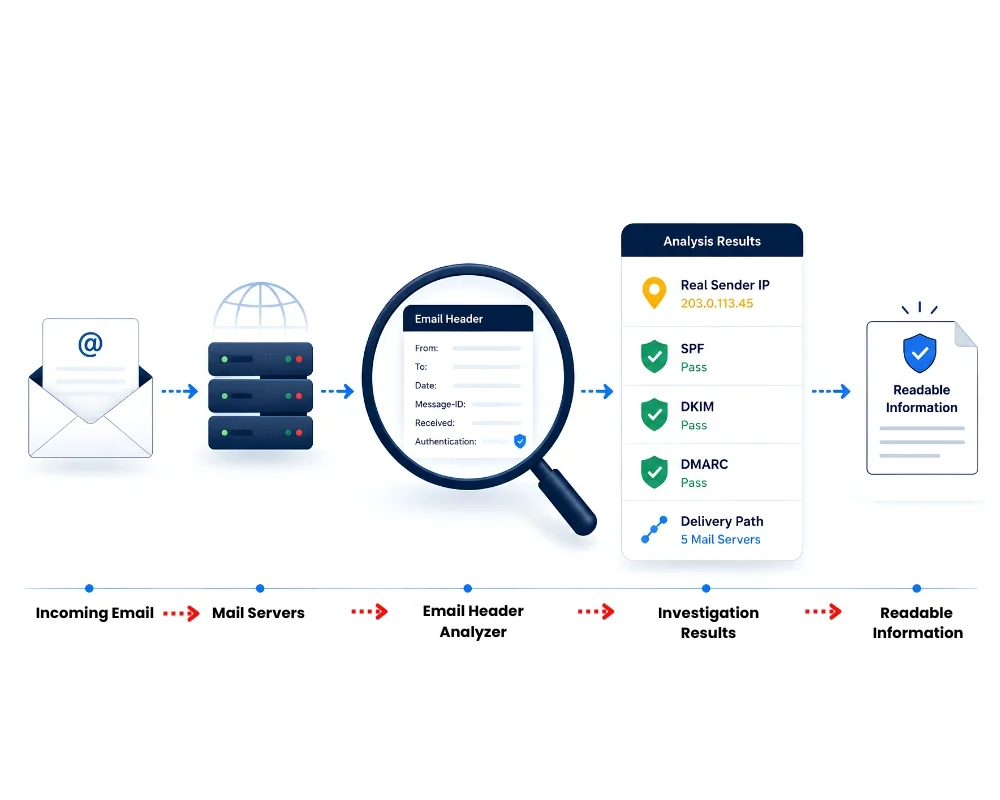
Email header analyzer tool reads hidden technical data attached to every email and turns it into plain, readable information. It reveals
These three checks that confirm an email was not faked. Most people never see any of this, because every major email client hides it by default. In fact, when investigation is involved, the term ‘Email header’ act as a goldmine for the investigators. That’s because it gives them clues and helps trace illegal and unauthorized activities.
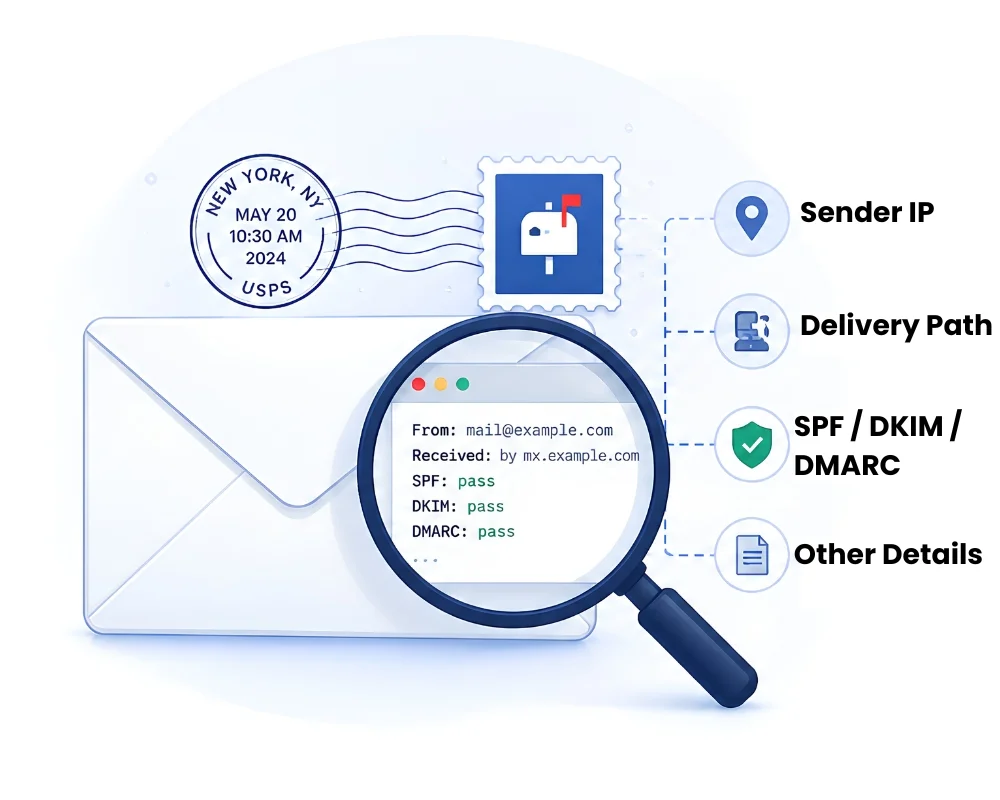
Think of it like stamps and postmarks on a physical envelope. You never notice them, but they show exactly where the letter started, every stop it made, and whether the stamp is genuine.
Message you actually read of an email client's dashboard.
Invisible part, packed with metadata: who sent it, every server it passed through, and the exact time each step happened.
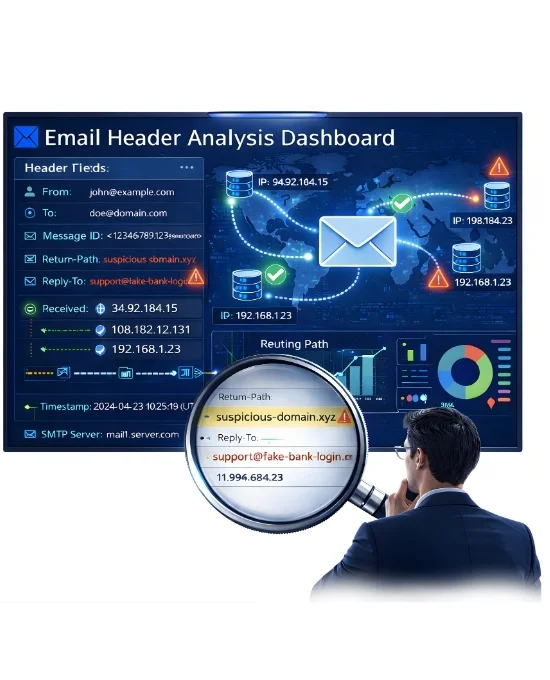
Your email client hides the header by default because it looks like technical information. But that "clutter" is what proves whether an email is genuine or forgery pretending to be your bank, your boss, or a delivery company.
💡 Once you know how to read a header, no spoofed email can fool you again.
Exact time the email was sent and received at each server, down to the second.
Email header contains more information than most users realize. Here is what is actually hiding inside it:
Every mail server email passed through, in order. From origin to your inbox.
Network address the email was sent from, not just the name shown in your inbox.
Confirms whether sending server was authorized to send on behalf of that domain.
A digital signature check that proves the email was not altered in transit.
Shows whether the email passed both checks above, and what happens if it didn't.
A unique ID assigned when an email was created, useful for tracing duplicates or forwards.
These seven fields are evidence a forensic investigator uses to prove whether an email is genuine or forged.
The steps look different depending on which email app you use. Find yours below.
For a deeper dive, see our guide to Gmail Email Forensics Analysis.
You can also perform Outlook PST file forensics to help investigators obtain sender details and other email-related information.
To start with Apple Mail forensics, click a specific email, then go to View, Message, and Raw Source to view the header information.
Careful Thunderbird forensics can easily identify manipulation or discrepancy in email content.
Once you have the header, you can analyze it for a deeper dive into your investigation.
Getting your first result takes three steps through email header analyzer tool, no technical background required.
Get your header → Paste it in → Read your result
Open the suspicious email and find its full header. This looks different for every email client (we have listed exact steps for the most common ones below).
Copy the entire header, including every line, and paste it into MailXaminer.
In seconds, you will see the sender's real IP, full server path, and whether SPF, DKIM, and DMARC passed or failed.
You don't need forensic training to catch a fake email. You need three steps and under a minute.
Most header analyzers just give a verdict. MailXaminer goes further.
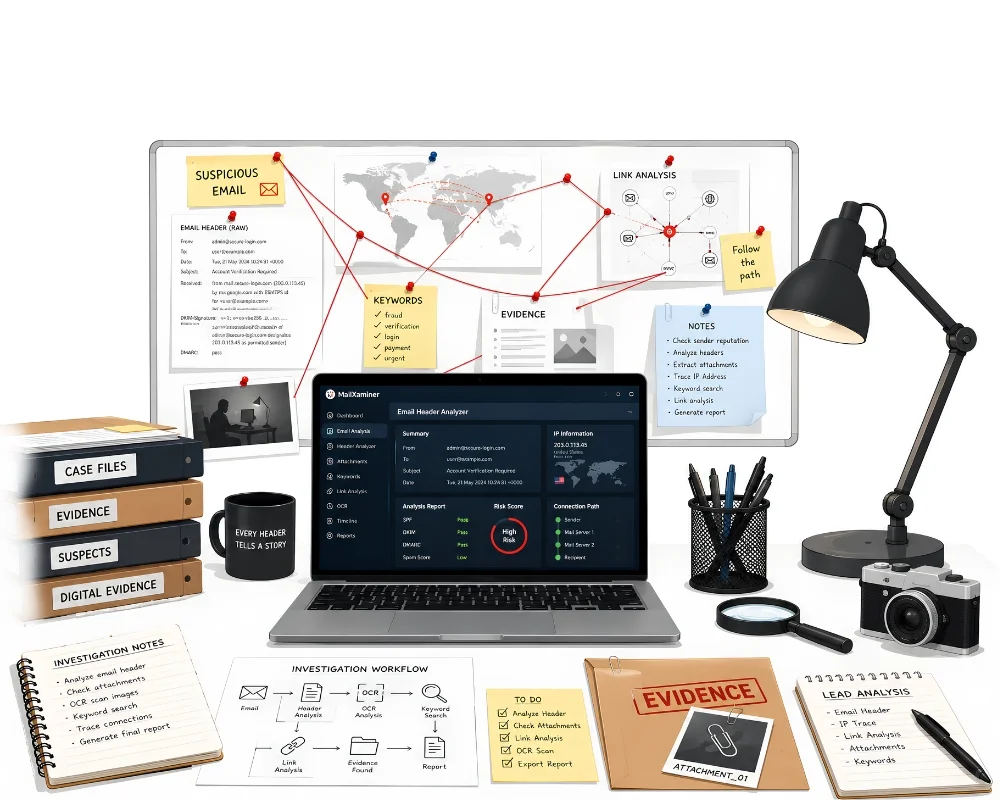
MailXaminer's header analyzer is developed for forensic investigators, not just curious inboxes. It will not just decode header. It cross-references sender, routing path, and authentication results against full email forensics suite. The same analysis you run here can become court-ready evidence if you need to take it further.
Used by law enforcement, corporate security teams, and forensic examiners, not just IT help desks.
Connects header analysis to full email evidence handling, chain of custody, and reporting.
Not limited to Gmail or Outlook exports.
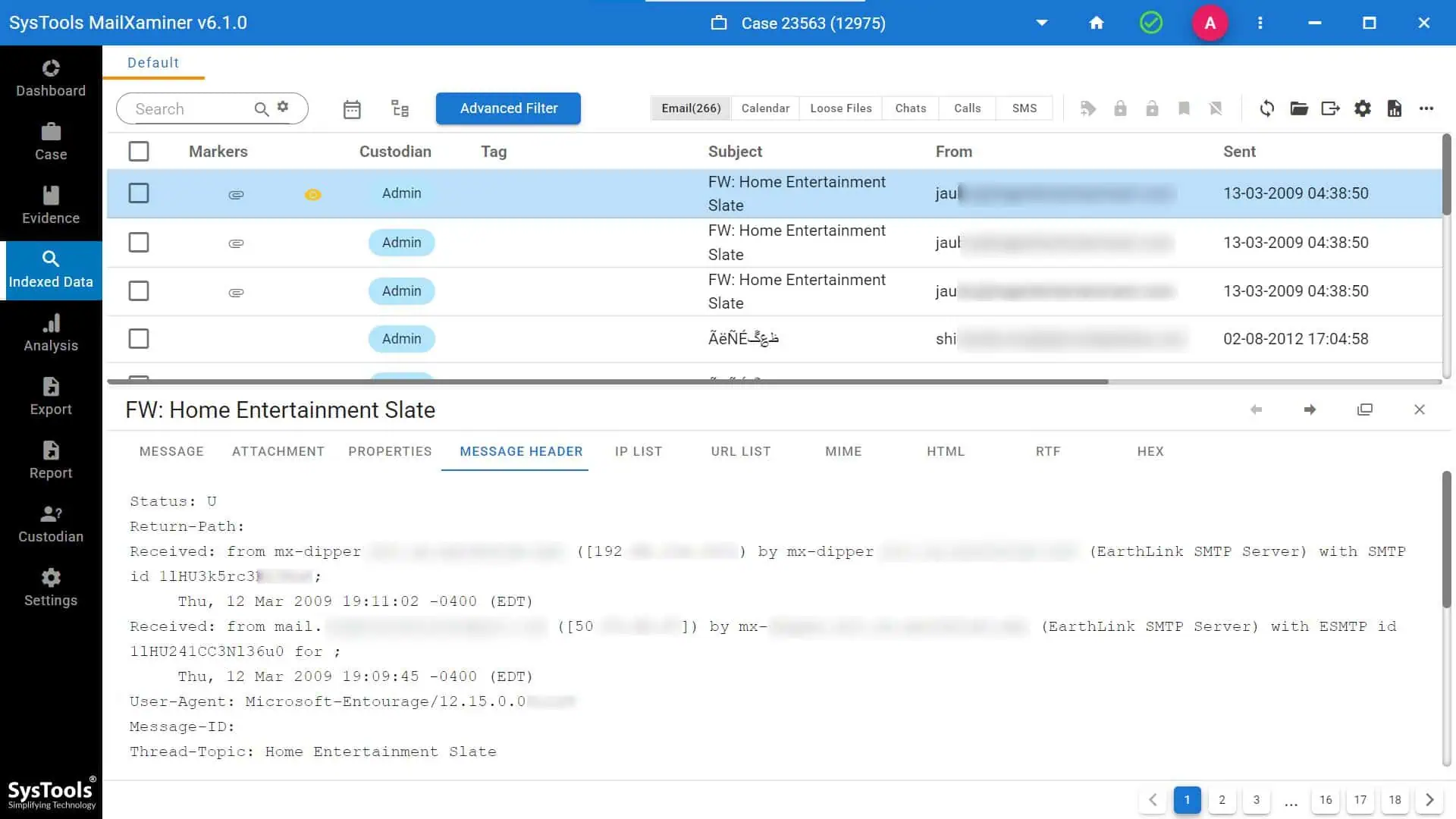
To tackle modern cyber threats and the challenges involved in investigating emails, our IT team has come up with an Email Forensics Software. It is designed to examine and analyze emails. With the help of the software, you can easily view all the components of the email header (regardless of email client) and analyze it at the same time.
It shows the MIME version, Message ID, Content type, CC, BCC, From, Sender address, etc. in detail. Therefore, tracing the digital footprints of the actual sender of the email becomes easier.
If this email turns out to be a serious matter later, you are already using the tool built to prove it.
MailXaminer's forensic dashboard: Full header breakdown alongside evidence tagging and reporting.
While analyzing an email, there are a lot of challenges that come in various forms. For instance, when an email is submitted for an investigation:
In most cyber-crime scenes, email is considered digital evidence and further handed over to cyber experts for investigation. The first thing investigators look into is email header analysis since it contains a lot of information about the path that the message has traversed.
Though email headers carry crucial data, using a specialized email header analyzer tool is recommended to gather and preserve evidence in the form of reports.