How to Write a Digital Forensic Report (Step-by-Step Guide)


After conducting a proper forensics process, you found the evidence. Emails, logs, and hidden traces are all there. But now the hard part is writing a report. Many investigators feel this is the toughest part. As one wrong detail, the entire case can lose credibility. In this write-up, we will see how to write a digital forensic report step-by-step, in a way that is clear, structured, and legally strong.
Why Most Digital Forensic Reports Fail
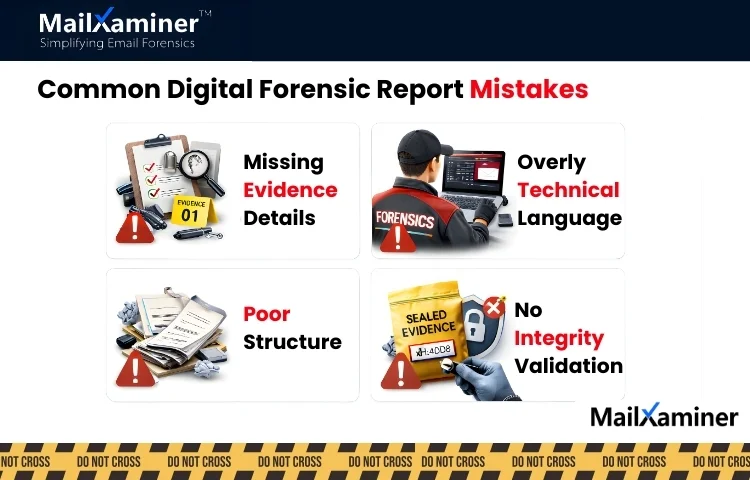
We can think of a detective who solves a tough case but writes extremely confusing and messy notes. In court, those notes confuse everyone. The case falls apart. This is exactly what happens in digital forensics. Reports can fail as they:
- Miss key evidence details.
- Usage of technical language.
- No proper structure.
- Report does not prove data integrity.
A forensic report is not just documentation. It is your voice in court. Experts in digital forensics recommend using simple language, an extremely clear structure, and complete evidence tracking so that even a non-technical reader can understand it well.
How to Write a Digital Forensic Report Step-by-Step
We can think of writing a digital forensic report as building a case file. To make it much clear we are dividing the process into 5 clear steps and every step has a purpose. Let’s dig deeper into each step which are as follows.
Step 1: Start With Case Identity
This is where the report writing begins. We can think of it as a cover page of your investigation. Which includes elements like.
- Case name and unique ID
- Investigator’s name
- Date of investigation
- Scope of the case
Without these elements, it is just like picking up a file with no label. You would not know what it is about or who worked on it. This is how a report feels without this section. It is the foundational step of how to write a digital forensic report. This part sets the stage. This tells the reader what the case is, who handled it, and why it matters.
Step 2: Preserve Evidence Integrity (Digital Lock)
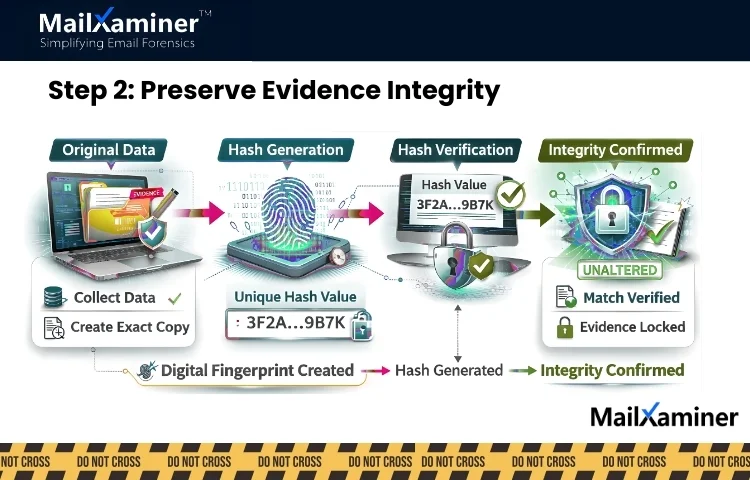
This can be understood by thinking of placing important evidence inside a sealed evidence bag. In digital investigations, that seal is known as a hash value. The working of hash is like a digital fingerprint. Even the smallest change in data creates a completely different hash.
A simple way to understand this. It is just like checking the weight of a box before and after the delivery. If the weight changes, this means something inside was altered. When this step is completed, it confirms:
- The data is original.
- Nothing was changed.
- Your findings can be trusted.
If you skip this step, the report can be questioned.
Related read – How to maintain chain of custody for digital forensic evidence.
Step 3: Document Evidence Clearly (Tell the Story)
This is where we have to explain what has been discovered clearly. Details to be added:
- Files and documents analyzed.
- System logs and activity records.
- Email communications.
- IP addresses and network data.
- Devices and storage areas examined.
- Timeline events.
It is just like an explanation of a case to a jury. They were not there when the evidence was found. You have to explain to them. Each and every element should answer.
- What happened
- When it happened
- How it happened
Vague statements like.
- Suspicious activity found (This is not correct)
- Correct – Unauthorized login attempts were recorded from specific IP addresses, followed by the file access within 15 minutes.
This is one of the crucial steps in how to write a digital forensic report. When it is followed clearly, the reader can see the sequence. This step connects the dots on the map properly, which reveals the full picture. As it is said in digital forensics, clear, specific, and structured details make a report strong and trustworthy.
Step 4: Explain Your Method (How You Investigated)
Now we have to prove in court how we reached our conclusions. Which include:
- Tools we used,
- Steps we followed.
- How the data was collected.
This matters because our report has to prove that this is repeatable which means if any other investigator follows your steps. They should arrive at the same results. We can think of it like a recipe; if you will not list the ingredients and steps, no one can recreate the dish.
Step 5: Present Findings in a Simple Format
If you have a strong finding, it can even become weak if it is not clear to read. Report structuring is very important, using:
- Clear headings.
- Bullet points
- Tables
- Timelines.
We can think of this like watching a movie.
The summary is the trailer. The full report is the complete story.
Also include:
- A short summary for decision makers.
- Detailed and complete sections for technical review.
In this way, both the technical readers and the non-technical readers can understand our report easily. We hope from the steps mentioned above you are clear on how to write a digital forensic report.
Related read – How to authenticate emails for evidence
Manual Reporting: Where Things Get Complicated
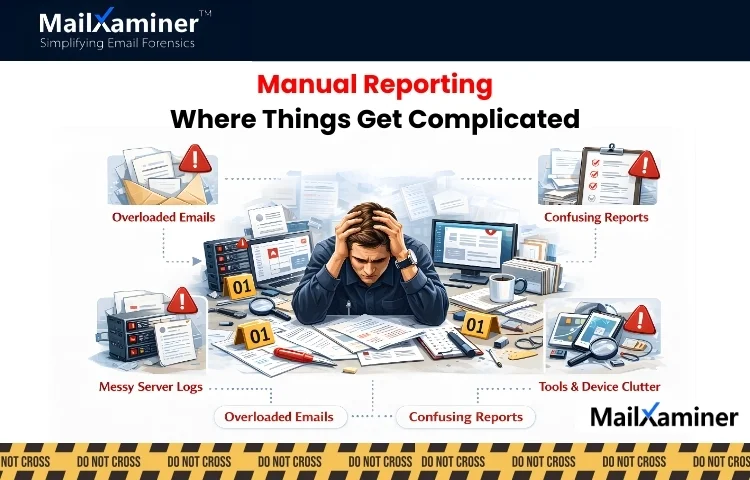
Now you have to imagine doing all these steps manually. You will be:
- Moving between different tools.
- Copying and pasting of data.
- Checking integrity separately.
- Building reports from scratch.
This manual procedure increases:
- Chances of mistakes.
- Missing critical details
- Increases time spent on repetition of work.
To bring more clarity, it is like building a car engine without proper tools. We might finish building it. We will be scared when planning to take that car on a road trip.
A Smarter Way to Handle Forensic Reporting
This is where professional investigators and organizations simplify their workflow. Tools like MailXaminer help you:
- Organize all the investigation data in one place.
- Analyze email evidence more clearly,
- Maintain data integrity automatically.
- Provide comprehensive reporting with “great accuracy and speed,” ensuring that the findings are presented in a court-admissible format that complies with the EDRM model.
Instead of piece-by-piece handling. Automated process becomes smooth and controlled. This is like switching from a manual navigation to a guided automated system during a high-stakes mission. Where you are still in charge but everything becomes faster and clearer.
This is the most effective way on how to write a digital forensic report.
Related read – Corporate espionage investigations: How investigators uncover hidden data
Final Thoughts
Digital forensic report preparation is not about using complex words. It is about making the truth easy to understand. If your report can:
- Clearly explain what happened.
- Prove the data is untouched.
- Guide the reader step by step.
Then we can say you have done it right. Keep it simple and structured when the work gets heavy. We recommend the use of smarter tools to stay accurate and efficient.
Frequently Asked Questions
Q – How to write a digital forensic report correctly?
A – One should always start with case details, preserve the integrity of the evidence, and document findings in a very clear way so it can be presented in court and that too in a structured format.
Q – What all should be included in a digital forensic report?
A – Case information, evidence details, methodology, findings and a clear conclusion for easy understanding.
Q – Why is evidence integrity important in forensic reports?
A – Evidence integrity proves that the data was not altered and ensures the report is reliable and accepted in legal grounds.