How to Trace an Email Address to Its Owner


Blog Overview – Every email you receive carries a hidden story.
- Sender Name
- Subject line
- Friendly message
These are just covers. Inside every email, there lives a forensic trail: Server timestamps, Routing paths, IP addresses and metadata. Knowing how to trace an email address to its owner means knowing how to read that trail.
Whether its about a suspicious message from an unknown sender, or you are an investigator building a legal case. This guide covers every method from free OSINT techniques to professional forensic tools.
Quick Answer
Yes, an email address can be traced to its owner using four different methods:
- Reverse Email Lookup (OSINT)
- Email Header Analysis
- Metadata Examination
- WHOIS Lookup & Direct Contact
- Forensic Tools
Right method depends upon your goal, quick verification or court-grade evidence.
Can You Trace an Email Address to Its Owner
Yes, you can trace an email address to its owner through finding information that can help identify who is behind the address. The information available depends on:
- Email provider,
- Sender’s privacy settings,
- Details contained in an email.
Public sources may reveal basic identity information, while email headers and metadata can provide technical clues about message and its sender. Think of an email like a shipped package. The message it contains is what you ordered. But box itself, tells you exactly where that package originated, every facility it passed through, and who sent it.
Through routing labels, postal stamps and handling marks. That box is the email header and yes, it can be read, if user know where to look.
Did You Know?
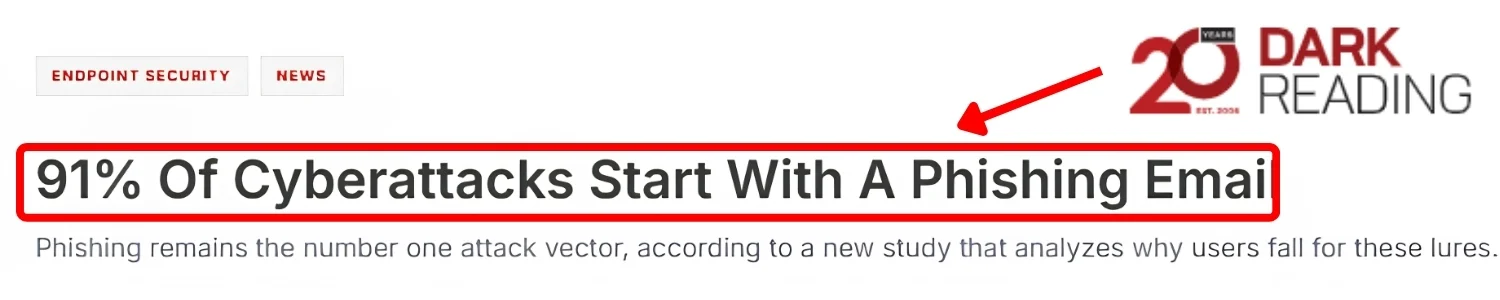
According to Dark Reading, 91% of cyberattacks begin with a phishing email. The skill to trace an email address is essential for businesses and investigators. Skill to trace an email address is essential for businesses and investigators.
This traceability of an email depends on three factors:
- Email provider used.
- Usage of anonymizing tools like VPN by sender.
- Method you apply to trace it.
Here is a quick map before we go deep.
| Your Situation | Best Method | What you will get |
|---|---|---|
| Suspicious personal email | OSINT / Reverse Lookup | Names, Social profiles and Company |
| Security breach | Header Analysis | IP Address and server path. |
| Legal and forensic investigation | Forensic Softwares | Court-admissible evidence package. |
| Bulk email analysis | Email forensics software | Full identity and metadata at scale |
Method 1: Reverse Email Lookup: Free OSINT Approach
OSINT stands for Open Source Intelligence: This is exactly as it sounds like. You use publicly available information to trace email sender identity. Before touching a single element.
Here is how to trace an email address using OSINT ‚ here are some methods:
- Google Trick: You can paste any email address inside quotation marks in Google‚ for example‚
"suspect@domain.com"to see any page‚ forum post or profile where this email address appears. - Inspect Social Media: Try copying and pasting that email into LinkedIn‚ Facebook and X (Twitter) and search. Many people use primary email to create accounts: One hit can get someone’s full name‚ employer‚ and photo?
- Reverse Email Lookup Sources: Services like Spokeo and BeenVerified can cross-reference email addresses with public databases, social networks and directories. They can extract owner name, job title and associated accounts in seconds.
OSINT Drawback
Free OSINT method works well for professional and personal emails. It can struggle with fake addresses, disposable email services and those who scrubbed their digital footprint. For these cases, move to method 2.
Method 2: Email Header Analysis
If OSINT is a detective asking in neighborhood, email header analysis is detective directly pulling security camera footage. Email header is full technical record of an email’s journey. It contains every server it passed through, every timestamp it collected and the originating IP addresses of sender. Here is how to read email headers to find the sender, step by step:
In Gmail:
- Open Email you want to inspect.
- Click three dot menu.
- Select “Show original”
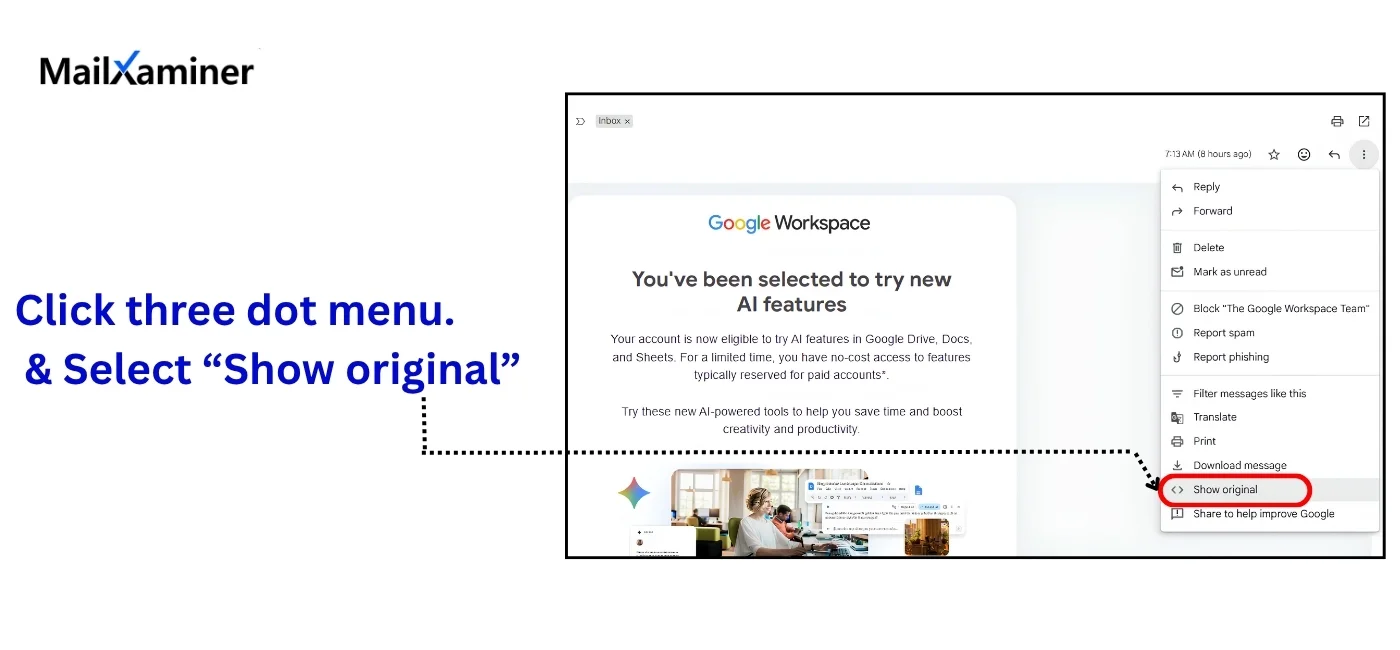
- Look “Received: from” field, this is the first sender that handled the email and is closest to the source.
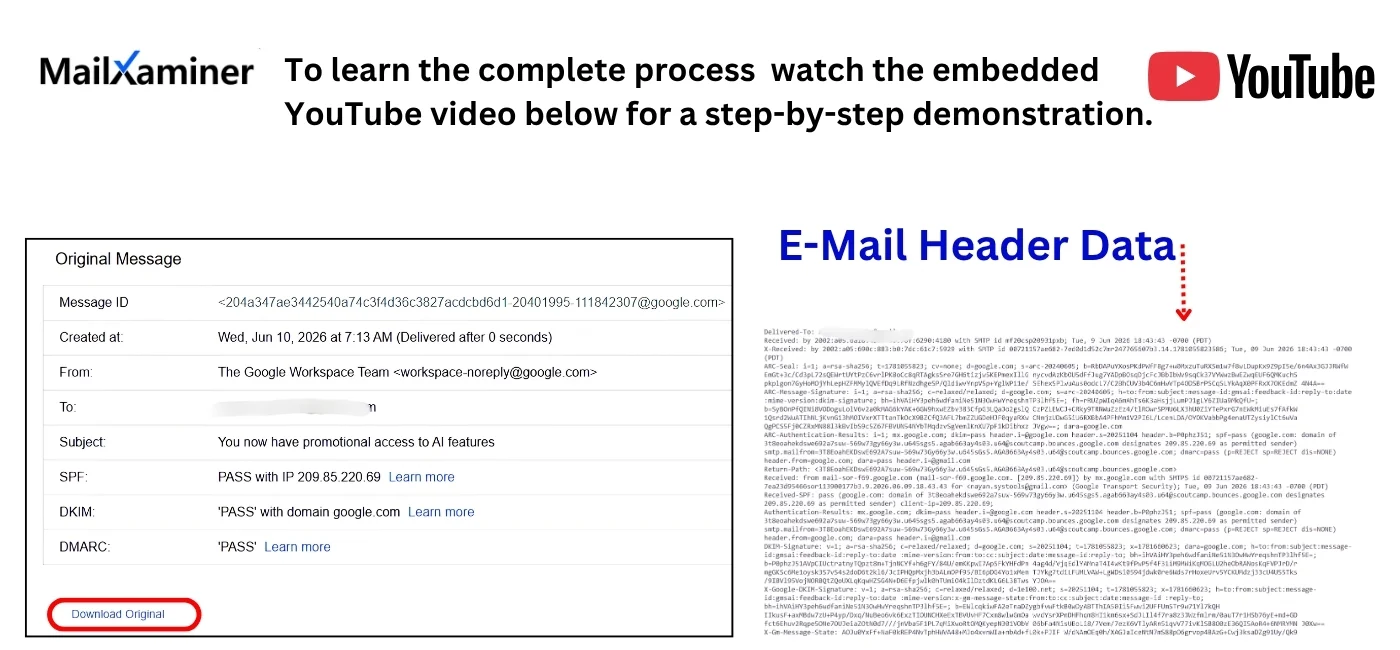
- Watch: How to analyze Email Headers
In Outlook:
- Open email
- Click on three dot menu in email window.
- Select View and under View, click View message source.
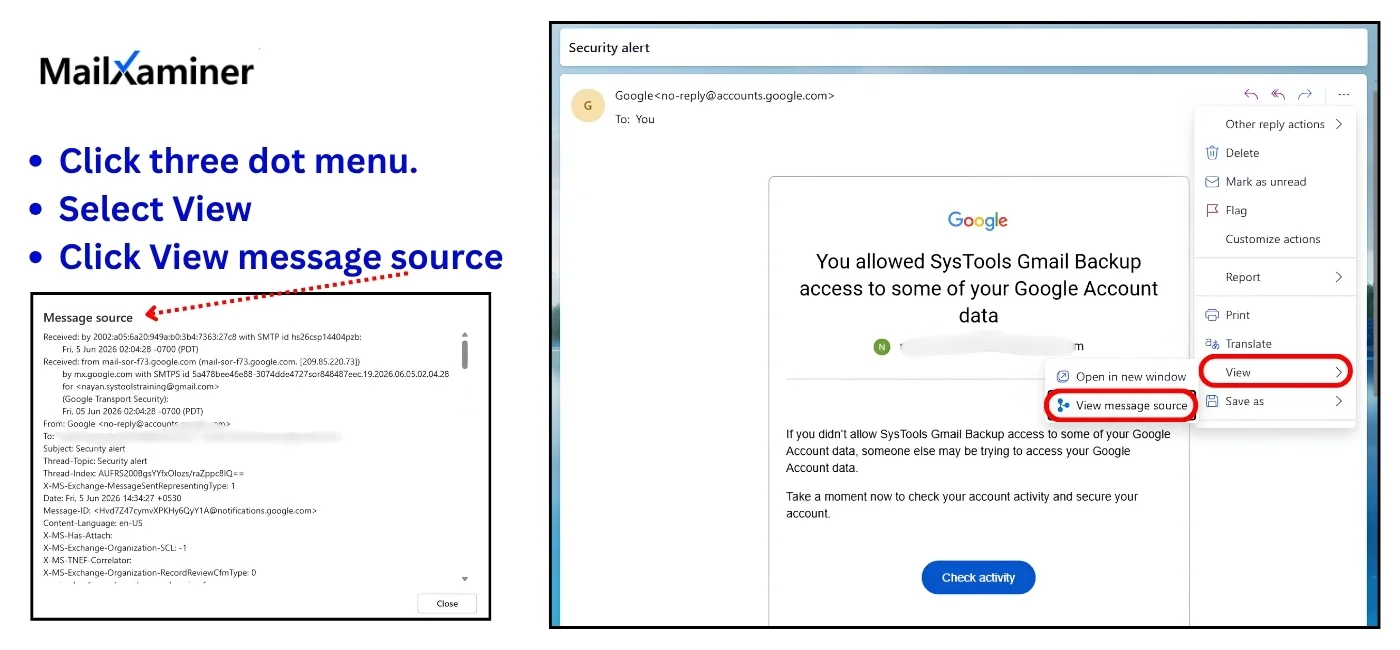
- Email header will appear.
- Email header will appear.
Reading Originating IP: The Received: from field on top contains the originating IP address. Think this as the postmark on a letter. It conveys you the city or ISP the message was mailed from.
Once you have an IP, you can run it through geolocation tool like MXToolbox or WhatIsMyIPAddress. You will get sender’s approximate location, like country, city, and Internet Service Provider.
Important Caveat:
Gmail’s web interface replaces sender’s IP with Google’s server IP in the header. This is by design as Gmail protects sender privacy, Corporate servers, however, expose true originating IP. This is the reason analysis of headers is far more powerful for business and forensic cases than personal threads.
Method 3: Email Metadata: The Hidden Data
Email metadata includes: the sender’s mail client and version, the device operating system used, send timestamps (cross-referenceable with time zones), Message-ID strings unique to each email, and MIME type data revealing attachment types even if attachments were removed.
Metadata is evidence many people never look for when looking for an answer to how to trace an email address to its owner. We can think of metadata like fingerprints on an envelope, not the letter inside. Readers can’t see them with naked eye, but they are there. Email metadata includes:
Sender’s mail client and version.
- Device operating system used.
- Timestamps (Cross-referenceable with time zones)
- Message-ID strings
- MIME type data (Revealing attachment types even if attachments were removed)
Forensic Fact
Even a “fake” email address throws metadata. These elements reveal a pattern which helps investigators identify the real person behind spoofed or disposable address. For everyday users, it is difficult to extract metadata manually. For Investigators, it is one of the most reliable layers.
Method 4: Tool-Based Approach
Free method works extremely well for small data sets, say 05 to 10 emails. But when you have to deal with thousands of messages, a complex legal case or bulk data that demands court-admissible documentation. Free methods are not enough.
MailXaminer is developed for these situations. It is a professional email forensics software where investigators can find exactly what they need. In Business Email Compromise (BEC) cases, this tool becomes helpful where investigators can find exactly what they need in massive archives. This is built for cases where being wrong is not an option
See MailXaminer in Action
Method 5: WHOIS Lookup and Direct Contact
When an email uses company or custom domain (not a free provider like Gmail or Yahoo), two low-effort methods can confirm ownership.
WHOIS Lookup: Every registered domain has public registration data. Run that domain (the part after the @ symbol) through a free tool like whois.com or ICANN Lookup. You will get:
- Registrant organization
- Registration date
- For business domains, often the hosting provider.
Note: Many personal domains use privacy protection services that mask this data.
If WHOIS data (or the domain name itself) points out a real company, fastest confirmation is simply asking. Search the company name for a phone number or general contact email, and ask them to confirm whether the address belongs to their organization.
A Note for Legal Use: Reverse lookup and header analysis are good to verify senders, protect your business, or build a documented case. They are not appropriate for stalking, or unauthorized surveillance. If you’re handling data under GDPR, CCPA, or similar regulations, keep your investigation limited to what’s necessary and store any findings securely.
Wrapping Up
Learning how to trace an email address to its owner is not about single action. It is a layered process, that starts with OSINT for quick read on the sender. Continues with header analysis and goes till metadata digging when the case demands more. When scale, documentation and legal admissibility are needed professional tool enters the picture. Evidence is already living in those emails; right method brings it to the surface.
Frequently Asked Questions
Q: Can an email address be traced to its owner?
A: Yes, via combination of header analysis, metadata findings and OSINT techniques, most emails addresses can be tied back to real person or organization. For professional and legal cases, forensic tools are to be used.
Q: Can police trace an email address?
A – Yes with valid court order or subpoena, law enforcement can compel email service providers to provide the data like historical IP logs, and session metadata. Google’s Transparency Report shows they complied with government data requests nearly 80% of the time in 2022.
Q: Is it possible to trace an email address location?
A – Yes, with some limitations. The originating IP from email header can be geolocated to a country, city and ISP level. It will not give you exact home address. For investigators. It is enough to anchor a subpoena request.