Big Data Investigative Analytics: Simplified Guide


Blog Overview – Investigators today are consumed with massive digital data in the form of emails, chats, and files. In their research, they expect to find critical evidence faster. The real challenge here is not just data collection and investigation, it is about making sense of the collected data quickly and accurately in a way that stands strong in court. To make this process easier, we will be discussing Big Data Investigative Analytics and how investigators handle massive digital evidence with clarity.
What Is Big Data Investigative Analytics
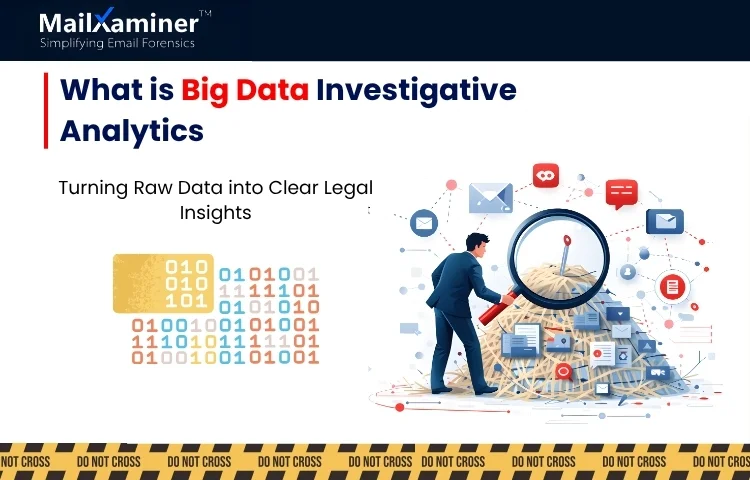
Big Data Investigative Analytics is a simple process through which we collect, process, and analyze an extremely large volume of digital evidence like emails, chats, logs, and files to extract meaningful insights, patterns, and proofs from the raw data.
To explain this more simply, it is turning a mountain of raw data into clear answers that can be trusted. Instead of searching manually, one can use a smart system that scans the entire haystack, detects anything unusual, and brings the needle to you. From a Digital Forensics angle, this process ensures:
- Evidence should be discovered efficiently.
- Patterns and relationships are identified.
- Data should remain unchanged and legally acceptable.
Related Read – Role of digital forensics in commercial litigation
Why Big Data Investigative Analytics Matters
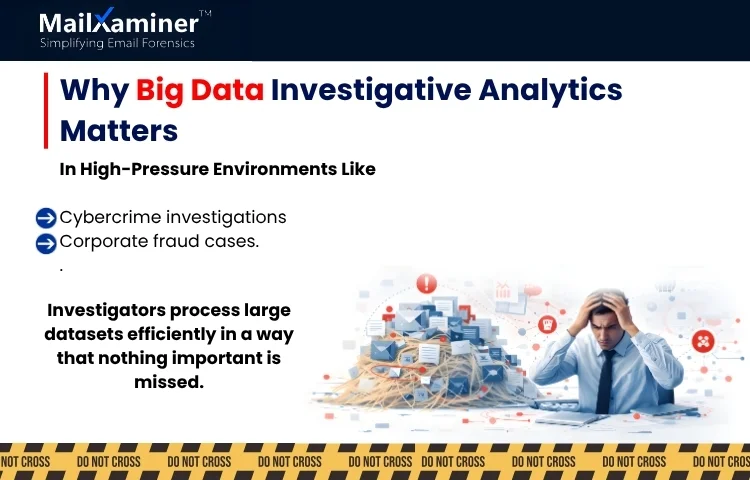
It matters because digital data is growing at a rapid speed. Every element, email, attachment, login, and message adds to the pile of data. Without a proper and managed system, investigators become slow and confusing. This confusion makes important clues merged with irrelevant data.
In extremely high-pressure environments like cybercrime investigations or corporate fraud cases. Investigators have to process large datasets efficiently in a way that nothing important is missed.
How Investigations Actually Work
Big Data Investigative Analytics is a simple process:
- Collect
- Process
- Analyze
- Present
In the Digital Forensic arena, data is collected from different sources. It is then organized into a structured format. Once the organization is completed. Several forensic tools identify patterns and connections.
Finally, the identified findings are presented clearly in a prescribed format for legal and decision-making purposes. This highly efficient process transforms chaos into clarity.
Related Read – How to write digital forensics report.
Data Silos Slows Everything Down

One of the major challenges in investigation is data from different platforms. Emails, chats, and cloud files are all stored at different locations. To manage this, investigators have to switch between tools, which reduces efficiency and increases the time to be spent on investigation.
This process can be seen as searching for clues in different buildings instead of one room. This fragmentation is the major reason for increased effort and reduced efficiency.
Manual Methods Break at Scale
In investigations, many investigators still adopt traditional methods and struggle with large data sets. These manual procedures become slow and tiring. Methods like basic keyword searches miss hidden and complex evidence. Due to large data investigation systems lag or crashes, the investigation process is much harder. Let’s check out the difference between them.
| Method | Speed | Accuracy | Risk |
|---|---|---|---|
| Manual Review | Slow (Time-consuming) | Low | High |
| Basic Tools | Medium | Medium | Medium |
| Advanced Analytics Tools | Fast | High | Low |
Hidden Risks in Big Data Cases
Improper handling of big data is one of the major issues that leads to serious risks. If the data is not handled correctly:
- Critical evidence will be missed.
- Incorrect conclusions will be drawn.
- Poorly managed data may not be accepted legally.
This is one of the major hidden risks one should be careful of when executing big data investigative analytics. Data integrity is a major concern if evidence cannot be proven to be unchanged. It loses credibility.
Smarter Investigation Approach
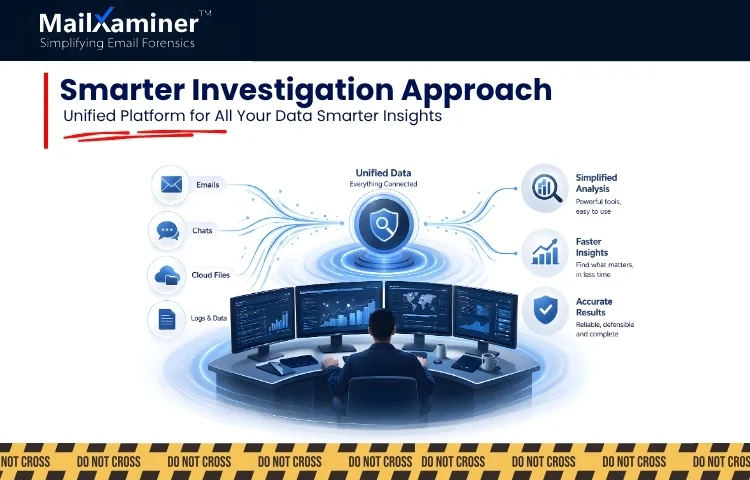
With a smarter approach, we get a unified system that helps us bring all data together and simplify the analysis. Instead of switching the tools. An investigator can work in one environment where everything remains connected and the analysis becomes more user-friendly and accurate.
This is where solutions like MailXaminer step in and act as a central investigation platform for the management of large-scale digital evidence efficiently. These tools work like a control room where every signal remains visible, which helps investigators focus on analysis rather than searching.
This approach reduces confusion, improves speed, and helps in such a way that no critical evidence is overlooked. We hope now you have some clarity on how professional tools smooth out big data investigative analytics?.
Ensuring Evidence Integrity
In any investigation procedure, finding evidence is only half the job. The real concern is whether that evidence can be trusted or not. This is where hashing methods like MD5 step in, and they are as good as digital fingerprints of your evidence. If even a single character changes, the fingerprint also changes instantly.
This makes evidence authenticity detection easy. This step ensures that findings are not only accurate but are also legally defensible.
Related read – What is MD5 Hashing
Quick Self-Check for Investigators
If you are an investigator, just take a moment to evaluate your big data investigative analytics approach and ask yourself these questions?
- Are you handling large datasets that too without system slowdown?
- Are you still relying on basic keyword searches?
- Can one identify patterns from their research and relationships quickly?
- Do you have confidence in your evidence, and is it legally defensible?
Conclusion
Big Data Investigative Analytics, it is not only about the management of massive volumes of data. It is about converting that data into clear, reliable, and legally valid evidence. It starts with the collection and organization of information to the analysis of patterns and ensuring data integrity. Every step plays a critical role in uncovering the truth. When done correctly, this approach reduces risk and allows investigators to act with confidence.
Frequently Asked Questions (FAQ)
Q – What are the biggest challenges in big data investigations?
A – Major challenges include giant data overload, scattered sources of data, and extremely slow manual methods. These are some challenges when investigating big data.
Q – How can investigators ensure digital evidence is trusted in court?
A – To ensure digital evidence is trusted, investigators use techniques like hashing (MD5) to verify that data is not altered. This ensures it remains authentic and legally acceptable.
Q – What biggest mistake investigators make in big data investigative analytics?
A – The biggest mistake is to rely on manual methods, which leads to missed patterns and slower analysis, which in turn leads to incomplete findings.